
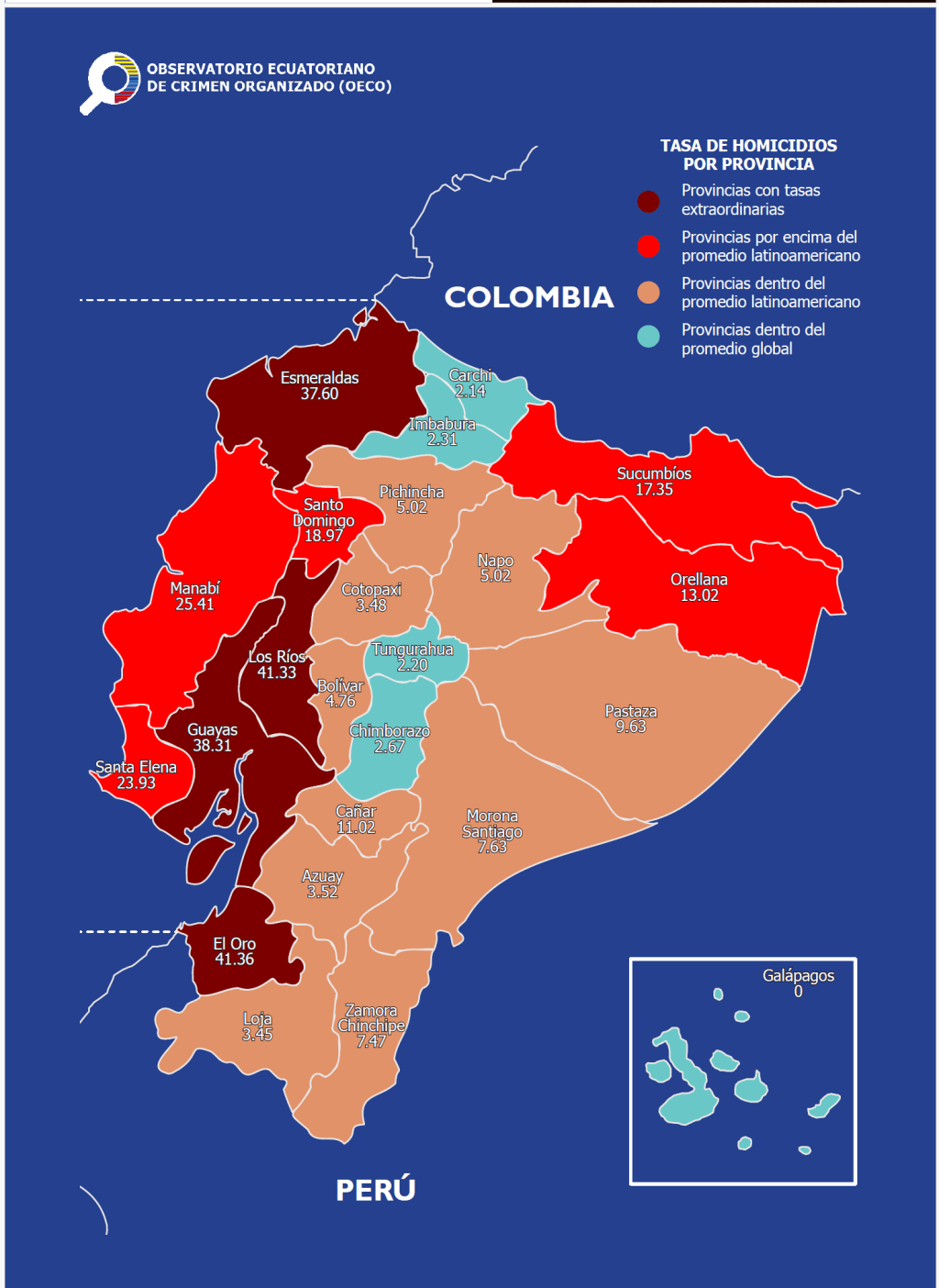
Based on the “BOLETIN SEMESTRAL DE HOMICIDIOS” report, here’s an analysis and projection:
- Sharp Increase in Homicides: Ecuador has experienced a dramatic increase of 528.10% in intentional homicides since the first half of 2019. This rise is particularly notable among young people aged 15 to 19, where homicides have surged by 500% since 2019. Firearms are the most common weapon used, accounting for 88.11% of all intentional homicides in the first half of 2023, showing a 58.76% growth since 2019.
- Geographical Distribution: The increase in homicides is not evenly distributed across the country. Zone 8, which includes Guayaquil, Durán, and Samborondón, accounts for 35.65% of all national homicides. Guayas province has the highest number of homicides, representing 46% of the national total. Other provinces with significant increases include El Oro, Los Ríos, and Manabí.
- Cantonal Analysis: At the cantonal level, Guayaquil stands out, contributing 33.54% of the country’s homicides. Other cantons like El Piedrero, La Troncal, and El Triunfo have seen dramatic increases in homicide rates, often linked to their strategic importance in drug trafficking routes. Smaller cantons with less population show extraordinarily high homicide rates due to their size, which skews the data.
- Projection: If current trends continue, Ecuador’s overall homicide rate could exceed 35 per 100,000 inhabitants by the end of 2023, positioning it as one of the most violent countries in Latin America. However, excluding Guayaquil from the analysis, the rest of the country might end the year with a rate closer to 30, still significantly high but showing a notable regional difference.
- Policy Implications: The disproportionate impact of homicides in specific areas like Guayaquil and along drug trafficking routes suggests that targeted policy interventions are needed. Strengthening law enforcement and judicial processes in these high-impact areas could help reduce national crime rates. Additionally, addressing underlying issues such as youth involvement in crime, gun control, and socio-economic disparities is crucial for long-term improvement.
- Rising Concerns: The involvement of younger populations in homicides and the increasing use of firearms point to the need for preventive strategies focusing on youth and community engagement. Also, inter-regional cooperation and intelligence sharing could be effective in combating organized crime and drug trafficking.The Significant Rise in Homicides, with a notable rise among youths aged 15 to 19; Firearm Usage The majority of homicides involve firearms, comprising 88.11% of all cases in the first half of 2023, indicating a critical need for effective gun control; Geographical Hotspots where large proportion of homicides is concentrated in specific areas like Zone 8, highlighting the need for targeted regional interventions; Organized Crime and Drug Trafficking with high homicide rates in areas along drug trafficking routes point to the influence of organized crime, necessitating comprehensive law enforcement and policy measures, indicate that the country and its new President Daniel Noboa need to draw new policies. Policy Implications: The data underscores the urgency for targeted policies focusing on crime prevention, especially among youth, and strategies to dismantle organized crime networks.

 De Los Reyes
Leave a comment