
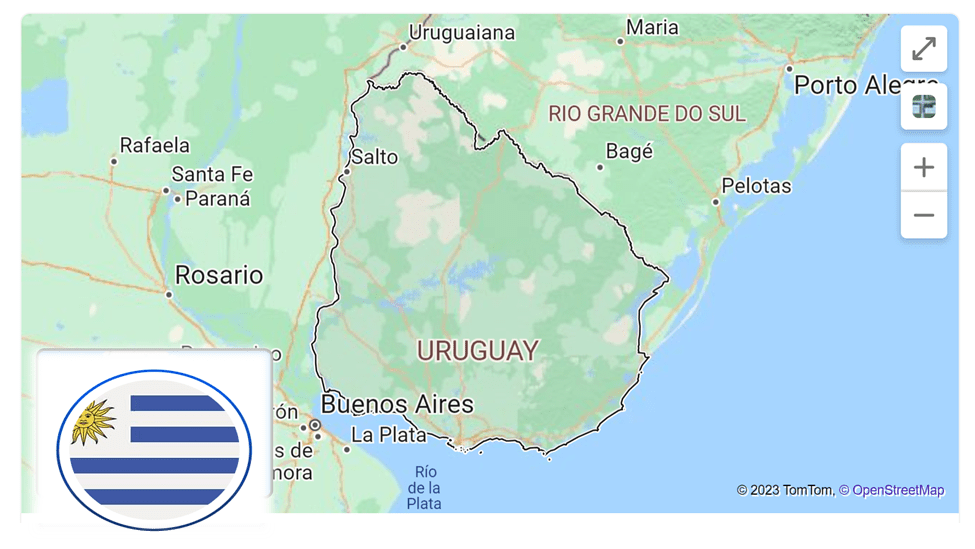
- As a nation once celebrated for its low crime rates and robust state institutions, Uruguay is navigating a complex shift. Traditionally lauded as “the Switzerland of Latin America,” the country is experiencing an uptick in crime, largely attributed to narcotics trafficking and emergent gang activity. Such developments, coupled with increased instances of corruption and organized crime, present new security challenges.
- Despite these concerns, Uruguay stands out for its progressive stance on drug policies, including the landmark legalization of recreational cannabis in 2013. This move positioned Uruguay as a pioneer in drug legislation, though it also surfaces regulatory and political complexities.
- Strategic Geography at Play –
- Geographically, Uruguay’s position is significant. Sandwiched between Brazil and Argentina, with key waterways facilitating access to the Atlantic, it’s a strategic nexus for trade. Recent years have seen its border areas, particularly with Brazil, become conduits for smuggling operations.
- Montevideo, the capital, doubles as a principal international port, recently attracting the attention of transnational drug networks aiming to reach European markets.
- Historical Backdrop
- Emerging in the early 19th century as a geopolitical buffer, Uruguay evolved through periods of growth, dictatorship, and democratic resurgence. Its early 21st-century battle with economic crises catalyzed social issues, including a rise in drug markets and, subsequently, crime.
- In response to these shifts, Uruguay has adopted innovative policing technologies and anti-money laundering strategies, diverging from the militarized responses common in the region.
- The Current Crime Climate and Response
- With organized crime gaining ground, Uruguay contends with homegrown gangs and international syndicates exploiting its trade routes. The recent political narrative has turned towards strengthening law enforcement and militarizing the fight against organized crime—a pivot from previous administrations’ reliance on a professional police force.
- Despite these efforts, Uruguay’s struggle with gun ownership, corruption, and an overtaxed prison system underscores the complexity of its security situation.
- An Inflection Point for Uruguay

 Uruguay’s historical resilience and strong institutions are now tested by these unfolding dynamics. The nation’s role as a potential trafficking transit point and a haven for laundering illicit profits adds to the urgency of addressing these security concerns. The “Dignity Plan 2020-2025” for prison reform exemplifies Uruguay’s commitment to maintaining its societal values while confronting new challenges head-on.
- [Note: This post is intended to provide a contextual overview and does not reflect the latest developments. For current updates, please refer to official sources.]



 De Los Reyes
Leave a comment